Warlock: Dungeons & Dragons marries eldritch power and open-world RPG
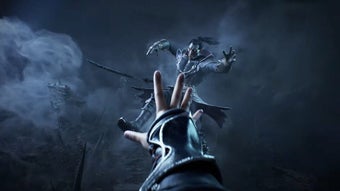
Warlock: Dungeons & Dragons, developed by Invoke Studios, places players in Kaatri's dark pact-driven journey, a third-person action-adventure RPG designed to explore forbidden magic and personal consequence. The game combines real-time combat, melee weaponry, and an expressive magic system that functions as both offense and puzzle tool. High-fidelity presentation includes Unreal Engine 5 visuals and full performance capture by Tricia Helfer. Fans of the Dungeons & Dragons franchise and players who prefer narrative-heavy, single-player open worlds will find a focused, character-led experience.
What kind of game is Warlock?
So, you step into Kaatri's shoes, a veteran warrior who trades a traditional path for a forbidden pact, and the game frames choices around consequence. The title is a third-person action-adventure RPG set in an open world inspired by the Dungeons & Dragons multiverse. Combat relies on melee plus real-time spellcasting, and spells serve as tools for exploration as much as for combat, shaping player-driven approaches.
Single-player focus keeps choices personal
Thus, the game is primarily a single-player experience with a heavy emphasis on narrative and personal choice, which concentrates story consequences on the player's actions. The developer removed tabletop dice mechanics in favor of a "No Dice Rolls" philosophy, so encounters resolve through player timing and tactics. Immersive sim elements let players approach obstacles with environmental tools and different solutions rather than scripted outcomes.
High-fidelity presentation suits the dark fantasy tone
So, visuals and performance aim to support mood rather than spectacle. The title uses Unreal Engine 5 to render an unsettling open world populated with iconic Dungeons & Dragons creatures such as Beholders and undead hordes. The lead role receives full performance capture, with Tricia Helfer providing voice and motion, which grounds scenes in character detail. Sound design focuses on atmosphere to underline tension during exploration and encounters.
Learning curve rewards experimentation with magic and melee
Thus, the design privileges player skill over random chance, because the No Dice Rolls philosophy makes success depend on timing and choice rather than luck. Players should expect to learn spells as versatile tools, using them for environmental puzzles as well as combat encounters. The open-world setting and encounters with iconic monsters encourage multiple approaches, so replay value comes from testing different combinations of tactics and environmental solutions.
Final position: a bold direction that invites cautious optimism
Warlock is a focused experiment from the developer that attempts to reframe Warlock fantasy in a real-time action setting. Players willing to back a studio shifting from its earlier work may find the game's ambitions worthwhile. Some caution is warranted, because the developer's previous title drew mixed reaction and community skepticism about delivering immersive sim elements; judge on the completed release rather than the reveal alone.